
A toilet cleaning checklist turns a cleaning routine into a clear record of tasks completed. The collection includes bathroom, washroom and restroom layouts that can support home routines or shared-facility inspections. Choose a checklist that covers your actual area and staff responsibilities.
View the templates and existing download links below.
Choosing the right format
A household checklist can focus on recurring tasks. A commercial restroom log usually also needs inspection times, staff initials and maintenance notes. Cleaning frequency depends on usage and your facility’s procedures; a template does not set a universal schedule.
Details to include
- Location, date, inspection time and responsible cleaner
- Toilet, sink, floor, touch-point and waste-bin tasks
- Soap and paper supplies, maintenance issues and supervisor review
How to use the template
- Assign tasks and frequencies for your facility.
- Record completion honestly and report problems that need separate attention.
- Review recurring issues and adjust the routine as usage changes.
Worked example
A log entry might read ‘Restroom A, 10:00, AB: soap refilled; leaking tap reported to maintenance’. Keep unfinished repairs visible rather than marking every item complete.
Download and printing notes
The existing links include ZIP, DOC files. ZIP files are bundles; check their contents after downloading. DOC files use the Word document format. Check editability, software compatibility and any formulas in the actual file before relying on them.
Why restrooms need a written cleaning checklist
A restroom is the room customers and staff judge most harshly. A spotless lobby counts for little if the toilet has no paper, the soap dispenser is empty or the floor is wet. Because restrooms get dirty quickly and are cleaned by different people on different shifts, memory is not enough. A toilet cleaning checklist turns “clean the bathroom” into a list of specific tasks that anyone can follow and anyone can verify.
A visible checklist on the back of the door also reassures users. When they can see that the room was checked an hour ago, they trust the facility more.
Where toilet cleaning checklists are used
- Offices and coworking spaces with shared staff restrooms.
- Restaurants, cafés and bars, where restroom hygiene reflects on the kitchen.
- Shops, malls and petrol stations with public toilets.
- Schools, colleges and gyms with heavy daily use.
- Hotels and guesthouses for public-area restrooms.
- Event venues and construction sites with temporary facilities.
- Homes, where a weekly checklist helps share chores fairly.
Tasks a complete checklist should cover
Restock
Toilet paper, paper towels or hand-dryer function, hand soap, sanitary bins and bin liners.
Clean and disinfect
Toilet bowls, seats, cisterns and flush handles; urinals; sinks and taps; door handles, locks and light switches; baby-changing stations.
Surfaces and fixtures
Mirrors, partitions, walls near urinals, hand dryers and countertops.
Floors
Sweep, then mop with suitable cleaner, paying attention to corners and the area around toilets. Put out a wet-floor sign while drying.
Waste
Empty all bins, including sanitary bins, and replace liners.
Checks
Leaks, blocked toilets, broken locks, flickering lights, unpleasant odors and ventilation.
How to set up a restroom cleaning routine
- Decide how often each task is needed. Busy public toilets may need hourly checks; an office restroom may need two full cleans per day.
- Split tasks into frequent checks (restock, spot clean, empty bins) and full cleans (disinfect all surfaces, mop floors).
- Print the checklist and post it inside the restroom door or in the cleaner’s cupboard.
- Ask staff to initial and time each check.
- Store completed sheets for at least a few weeks so managers can review patterns.
- Report maintenance issues separately, using a service request form, so repairs are tracked.
Daily, weekly and deep-clean versions
Hourly or shift check
A short list: paper, soap, floor, bins, obvious mess. Takes two to five minutes.
Daily clean
Full disinfection of toilets, sinks, handles and floors, with restocking.
Weekly deep clean
Descale taps and toilets, clean grout, wash walls and partitions, clean vents and wipe light fittings.
Monthly or quarterly
Check plumbing, inspect sealant around sinks, and review supply levels and costs.
Tips for a cleaner restroom
- Clean from top to bottom and from cleanest to dirtiest areas, so dirt is not spread to cleaned surfaces.
- Use separate, color-coded cloths for toilets and sinks.
- Follow the dwell time on the disinfectant label; wiping too soon reduces effectiveness.
- Wear gloves and follow the safety data sheet for each cleaning product.
- Never mix cleaning chemicals, especially bleach and ammonia-based products.
- Keep a small supply cart stocked so restocking takes seconds.
Common mistakes
- Ticking boxes without doing the task. Spot-check the restroom after the sheet is signed.
- Ignoring touch points. Door handles, flush levers and taps carry more germs than the floor.
- Running out of supplies. Track stock levels so you reorder before the cupboard is empty.
- Leaving floors wet. Wet floors cause slips; always use a warning sign.
- No clear responsibility. Each check should have a named person or role.
Worked example: a café with two restrooms
A 40-seat café struggled with complaints about its restrooms on weekends. The manager introduced a two-part checklist. Every hour from opening to close, a staff member checks paper, soap, bins and floors and initials a time slot. At closing, the closing team completes the full daily clean, disinfecting toilets, sinks and handles and mopping the floors.
On Mondays, the morning team performs the weekly deep clean, including descaling taps and wiping vents. A leaking cistern spotted during a check is reported and fixed within two days. After a month, the manager reviews the sheets and notices most missed checks happen during the lunch rush, so she assigns that slot to a specific staff member. Complaints drop noticeably. The café uses the same approach in its restaurant checklist templates for kitchen opening and closing tasks.
Accessibility and inclusive facilities
If your premises include an accessible restroom, give it its own section on the checklist. Check that grab rails are secure, the emergency pull cord hangs freely to the floor and is not tied up, the door opens easily and nothing is stored in the turning space. Baby-changing tables should be wiped and checked for stable hinges at every visit, as parents rely on them being clean and safe.
Toilet checklist FAQs
How often should public toilets be cleaned?
It depends on use. Busy public facilities often need hourly checks and at least one full clean per day; quieter office restrooms may need one or two full cleans daily.
What should be on a toilet cleaning log?
Date, time, tasks completed, the cleaner’s initials and any problems noticed.
Who should sign the checklist?
The person who completed the task. A supervisor can countersign during spot checks.
How long should I keep checklists?
Keep them for at least a few weeks for internal review. Some businesses keep them longer to show inspectors or clients.
Can I use the checklist at home?
Yes. A simplified weekly version helps share bathroom cleaning among family members or housemates.
Related checklists and forms
For broader operations, combine this checklist with an attendance sheet for cleaning staff and a vehicle inspection checklist if your team also maintains company vehicles. Keep supplier details in a contact list. More printable checklists are in the templates category.
Conclusion
A toilet cleaning checklist turns restroom hygiene into a routine instead of a reaction to complaints. Define tasks and frequency, post the sheet where staff can see it, require initials and times, and review the records regularly. Download one of the checklists below and adapt it to your facility.
Here Are Toilet Checklists
Toilet Cleaning Checklist
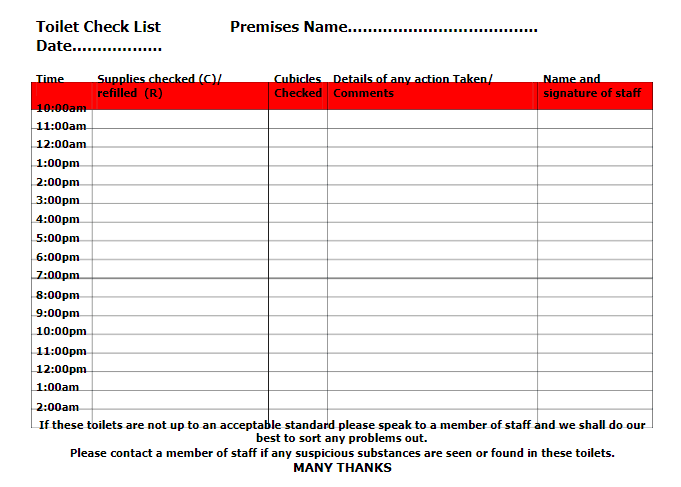

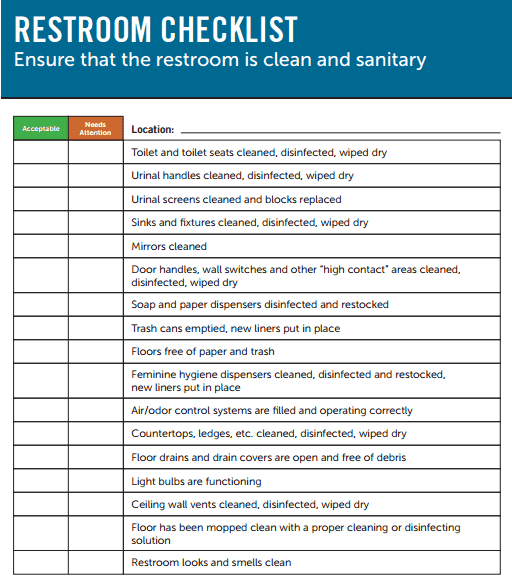
Restroom Checklist
This restroom checklist template can be used to organize cleaning and inspection activities in a shared or commercial bathroom. It provides a useful framework for checking general restroom condition and maintaining a consistent cleaning routine.
It can be customized for offices, schools, hotels, restaurants, workplaces, and other facilities. Additional fields can be added for inspection time, staff initials, supplies, maintenance issues, or supervisor approval.
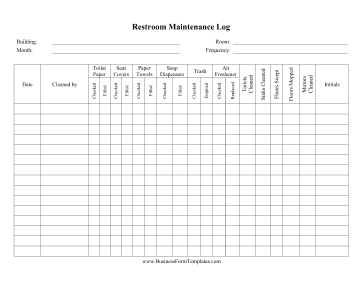
Washroom Cleaning Checklist
This washroom cleaning checklist provides a structured format for managing regular cleaning activities. It can help cleaning staff work through required tasks systematically instead of relying on memory.
The template can be adapted for residential or professional use by adding location details, cleaning frequency, responsible staff, and additional tasks. It is particularly useful when several bathrooms need to follow the same cleaning procedure.
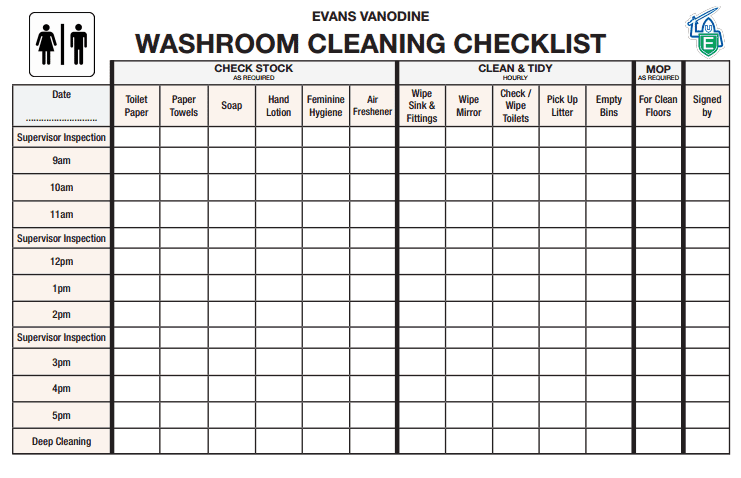
Toilet Checklist Sample PDF
It can be particularly useful for people creating a cleaning procedure for an office, commercial property, rental unit, school, or other shared facility. Customize the checklist according to the size and requirements of the restroom.
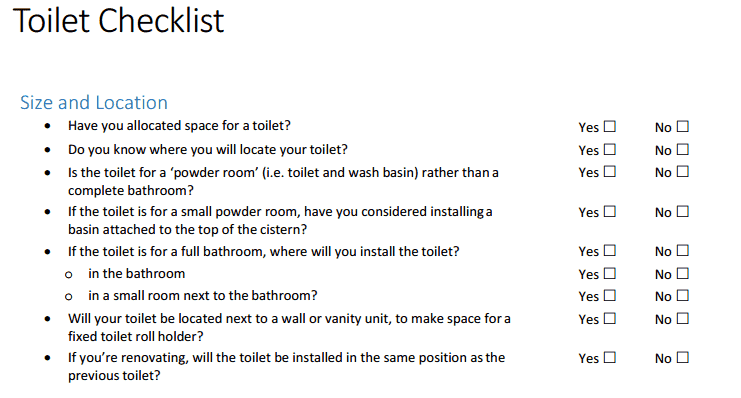
Toilet Checklist Template
This toilet checklist template offers a flexible foundation for creating a customized bathroom cleaning routine. Users can modify the tasks and add fields that are relevant to their specific property or cleaning process.
For professional use, the template can be expanded with staff names, inspection dates, cleaning times, supply checks, comments, and maintenance observations. For home use, unnecessary fields can simply be removed to create a shorter routine checklist.
Related templates
For related tasks, see Restaurant Checklist Templates for Startup and Operations and Free Daily Planner Templates and Scheduling Example.