
A vehicle condition report records a vehicle’s observed condition at a particular time. Use the templates below for rental handovers, transport pickup and delivery, fleet records or a used-car transaction. The aim is a consistent record of observations, not a guarantee of mechanical reliability.
View the templates and existing download links below.
Choosing the right format
For handovers, choose a layout with dates, mileage, signatures and space for damage notes. For transport, keep separate pickup and delivery records. A diagram or attached photographs can make the location of visible damage clearer.
Details to include
- Make, model, registration or VIN, mileage and inspection date
- Exterior, interior, tires, glass and other areas actually inspected
- Damage location, photographs, inspector details and handover acknowledgment
How to use the template
- Identify the vehicle and inspect it in suitable lighting.
- Record specific observations rather than broad labels such as ‘good’.
- Compare later observations with the earlier report and note changes separately.
Worked example
Write ‘small dent on left rear door, photo 3’ rather than ‘body damage’. Date the photograph and retain it with the report. A qualified mechanical inspection may still be needed for a purchase decision.
Download and printing notes
Check the destination and file format of each existing download before using it. Some samples link to an external resource; its availability and terms are controlled by that provider.
Why a vehicle condition report protects everyone
When a vehicle changes hands, even for a day, disagreements about scratches, dents and fuel levels are common. Was that scuff on the rear bumper there at pickup, or did it happen during the trip? A vehicle condition report answers that question with a dated, signed record made while both parties are standing next to the car.
The report does not judge whether the vehicle is mechanically sound. It simply documents what was observed at a specific time and place, which is exactly what a rental company, transporter, fleet manager or private buyer needs.
Common situations that call for a condition report
- Car rental and car sharing: recorded at pickup and again at return.
- Vehicle transport: completed by the driver when collecting and delivering a vehicle.
- Company fleets: used when assigning a pool car or van to a new driver.
- Leasing returns: documents wear before the leasing company’s inspection.
- Private sales: gives the buyer and seller a shared record of visible condition.
- Body shop drop-offs: records existing damage before repair work starts.
What to record on the form
Vehicle identification
Make, model, year, color, registration plate and VIN. Copy the VIN from the vehicle, not from memory.
Date, time and location
Record where and when the inspection happened. Lighting and weather affect what can be seen, so note if it was dark or raining.
Odometer and fuel level
Write the exact mileage and the fuel or charge level. These figures often drive rental charges.
Exterior condition
Use the car diagram to mark scratches, dents, chips and cracks. Many forms use codes such as S for scratch, D for dent and C for chip.
Interior condition
Seats, carpets, dashboard, headliner and odors such as smoke. Note stains or tears.
Tires, glass and lights
Tread depth or visible wear, windscreen chips, and whether headlights and indicators work.
Accessories
Spare wheel, jack, charging cable, floor mats, keys and documents.
Signatures
Both parties sign and date the report. Unsigned reports carry much less weight in a dispute.
Get Free Vehicle Condition Reports Here
Blank Vehicle Condition Report
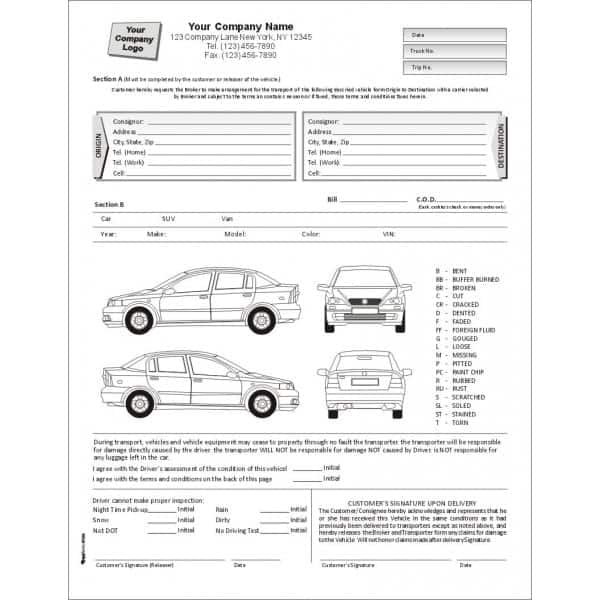
Vehicle Condition Report Form
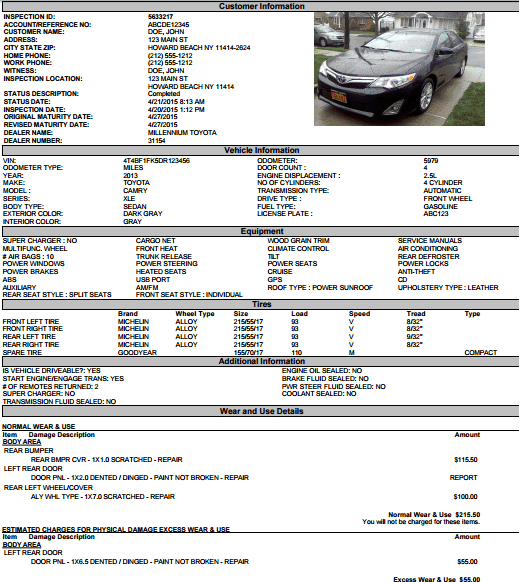
This vehicle condition report form provides a structured way to document vehicle condition during an inspection. A standardized form can help businesses and individuals follow the same inspection process each time a vehicle is checked.
The form can be used for vehicle rentals, fleet management, dealership inventory, transportation, or private vehicle records. Customize it with the fields needed to document exterior, interior, mileage, damage, and other observations.
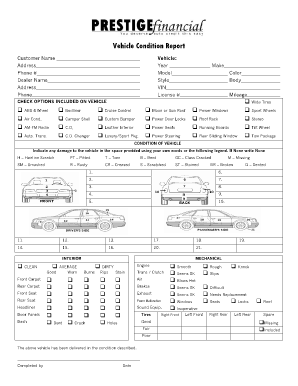
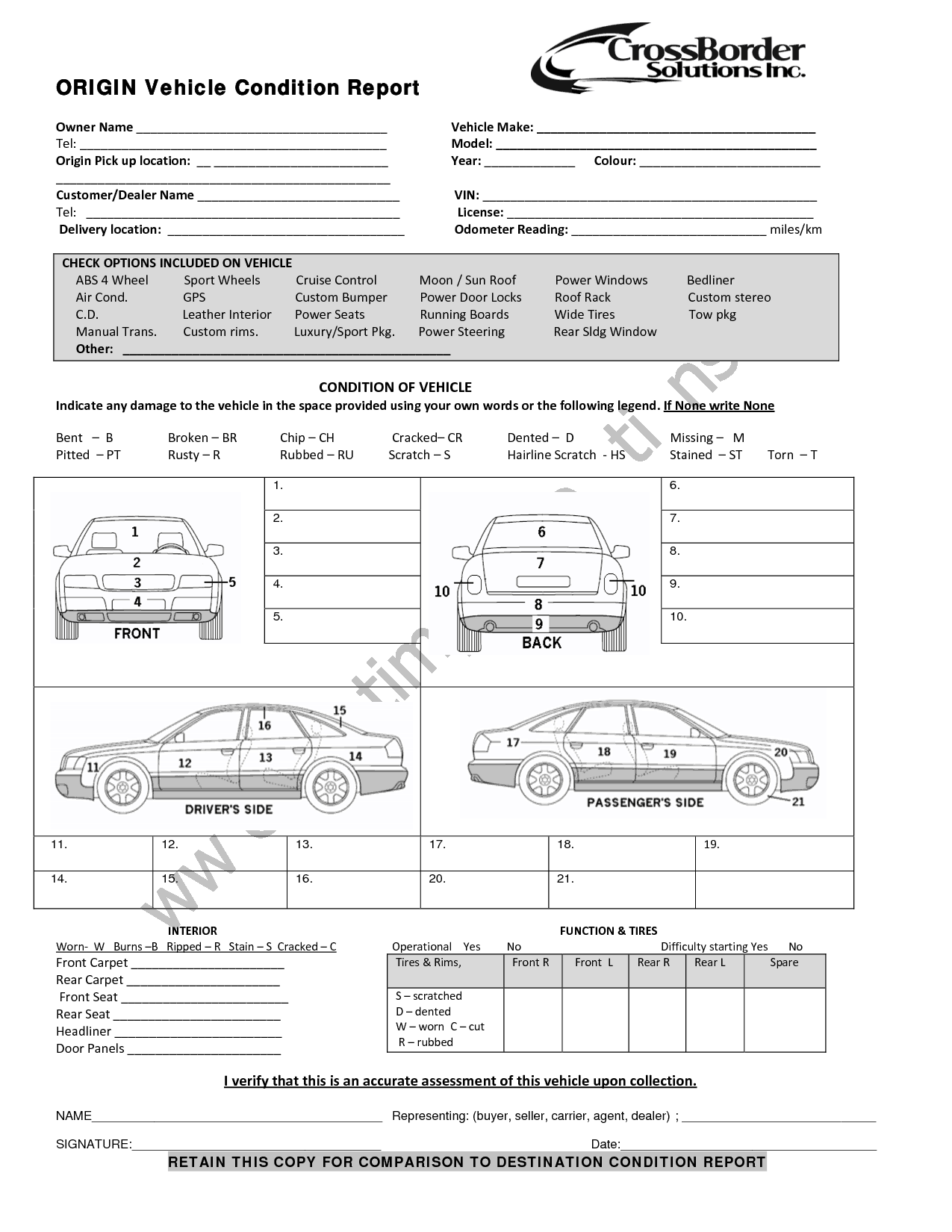
ORIGIN Vehicle Condition Report
Businesses can adapt the format for transport, delivery, fleet, rental, or other vehicle-management purposes. Adding photographs and detailed notes can provide additional evidence of the vehicle’s condition when appropriate.
Vehicle Condition Report Sample
It can serve as a starting point for creating a customized inspection process. Users can modify the fields to match the type of vehicle, inspection purpose, and record-keeping requirements of their organization.
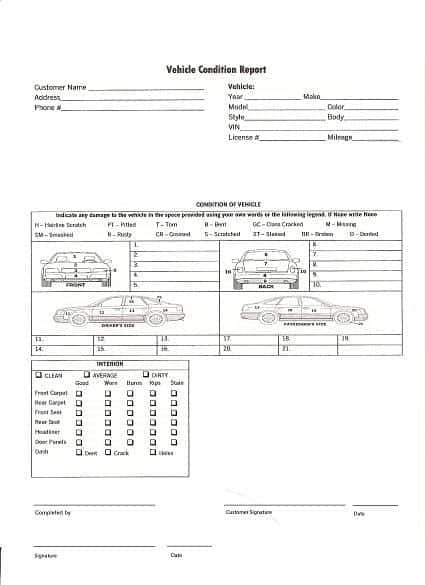
Vehicle Condition Report Template
This vehicle condition report template provides a reusable format for recording vehicle condition and inspection details. It can be customized for personal vehicles, used-car transactions, dealerships, transport companies, rental businesses, and fleet operations.
A standardized template makes it easier to maintain consistent records across multiple inspections. Add relevant details such as vehicle identification, mileage, inspection date, condition notes, damage descriptions, and signatures as required.
How to complete a vehicle condition report step by step
- Fill in identification details before walking around the vehicle.
- Start at the front bumper and move clockwise around the car, marking damage on the diagram as you go.
- Crouch to check lower panels, sills and wheels, where damage is easily missed.
- Open each door and check the interior, then the boot or cargo area.
- Record mileage and fuel from the dashboard.
- Take dated photos of each side, the roof if possible, and close-ups of any damage.
- Review the form together, correct anything both parties disagree on and sign.
- Give a copy to the other party, either on paper or as a photo or PDF.
Choosing the right template
Blank checklist reports
Simple and quick, useful for private sales or occasional use.
Diagram-based reports
Include outline drawings of the car so damage locations are clear; ideal for rental and transport.
Fleet forms
Add driver name, department and assignment dates, and work well alongside our vehicle inspection checklist forms for routine safety checks.
Pickup and delivery reports
Have two columns, one for collection and one for delivery, so changes during transport stand out.
Tips for clear, useful reports
- Inspect in daylight or a well-lit area whenever possible.
- Clean the vehicle first if it is very dirty; dirt hides scratches.
- Use measurements for larger damage, such as “8 cm scratch on rear left door”.
- Number your photos and write the photo numbers on the form.
- Keep completed reports with other vehicle paperwork, such as a car deposit form or appraisal.
Mistakes that cause disputes
- Rushing the walk-around. Most missed damage is on bumpers, wheels and roofs.
- Vague notes. “Some scratches” cannot be compared at return. Be specific about location and size.
- No photos. A form plus photos is far more convincing than either alone.
- Signing without reading. Both parties should read the report before signing.
- Not recording fuel or mileage. These are frequent sources of extra charges.
Worked example: a one-week van rental
Jordan rents a cargo van for a house move. At pickup, the rental agent and Jordan complete a diagram-based report. They mark a 5 cm scratch on the rear right door, a small chip on the windscreen and worn carpet in the passenger footwell. The odometer reads 48,215 km and the fuel gauge shows full. Jordan takes eight photos and both sign.
At return a week later, the agent notices a scuff on the rear bumper. Comparing the report and photos, they see it was not recorded at pickup, so it is new. However, the windscreen chip was already noted, so Jordan is not charged for it. The clear record keeps the conversation short and fair. Jordan files the report with the rental agreement and a cash receipt for the deposit refund.
Electric and hybrid vehicles
Electric vehicles need a few extra lines on the form. Record the battery charge percentage and estimated range instead of a fuel level, check that the charging cable and any adapters are present, and note the condition of the charging port cover. If the vehicle has a heat pump or battery warning lights, record whether any warnings appear on the dashboard at handover.
Vehicle condition report FAQs
Is a condition report the same as a mechanical inspection?
No. It records visible condition. A mechanical inspection by a qualified technician checks engine, brakes and other systems.
Should I use a paper or digital form?
Either works. Paper is easy to sign on the spot; digital forms make photo attachment easier. Keep a copy whichever you choose.
Who should keep the report?
Both parties. Each should have an identical signed copy.
How long should I keep condition reports?
Keep them at least until any deposit is returned and the period for raising claims has passed. Businesses often follow their own record-retention policy.
Can I use the report when selling my car?
Yes. It gives the buyer a clear record of visible condition. Pair it with a car appraisal form if you want a valuation record.
Conclusion
A careful vehicle condition report takes ten minutes and can prevent hours of argument. Record identification details, mark damage precisely, add photos and get both signatures. Download a blank, diagram or fleet template above, and explore more practical forms in the templates category.
Related templates
For related tasks, see Vehicle Inspection Checklist Forms and Usage Guide and Car Appraisal Forms: PDF Samples and Record Guide.