
These place setting templates provide two illustrated guides for arranging dinnerware: a Basic Dinner setting and a Three-Course Dinner setting. Download the editable SVG, PNG image and printable PDF together in each ZIP package. The diagrams are table guides, not guest seating charts or full-size cutting stencils.
A useful place setting follows the meal being served. Start with the plate and the utensils guests will actually use, then add the glass and napkin without crowding the table. There is no need to include extra pieces simply because they appear in a formal illustration.
The original article mixed place settings with seating plans. These are different tasks: a place setting organizes one diner’s plate, cutlery and glass, while a seating plan assigns people to tables or seats. This guide focuses on the arrangement at each place and explains how to adapt the diagrams to your menu.
Download both designs | Read the editing guide | Frequently asked questions
Download the two original template packages
Each button downloads a ZIP archive containing the editable SVG master, PNG image, static PDF and instructions. Extract the archive before opening it. Edit the SVG in compatible vector software and export new images or PDFs after customization. The supplied PNG and PDF are rendered references, not fillable forms.
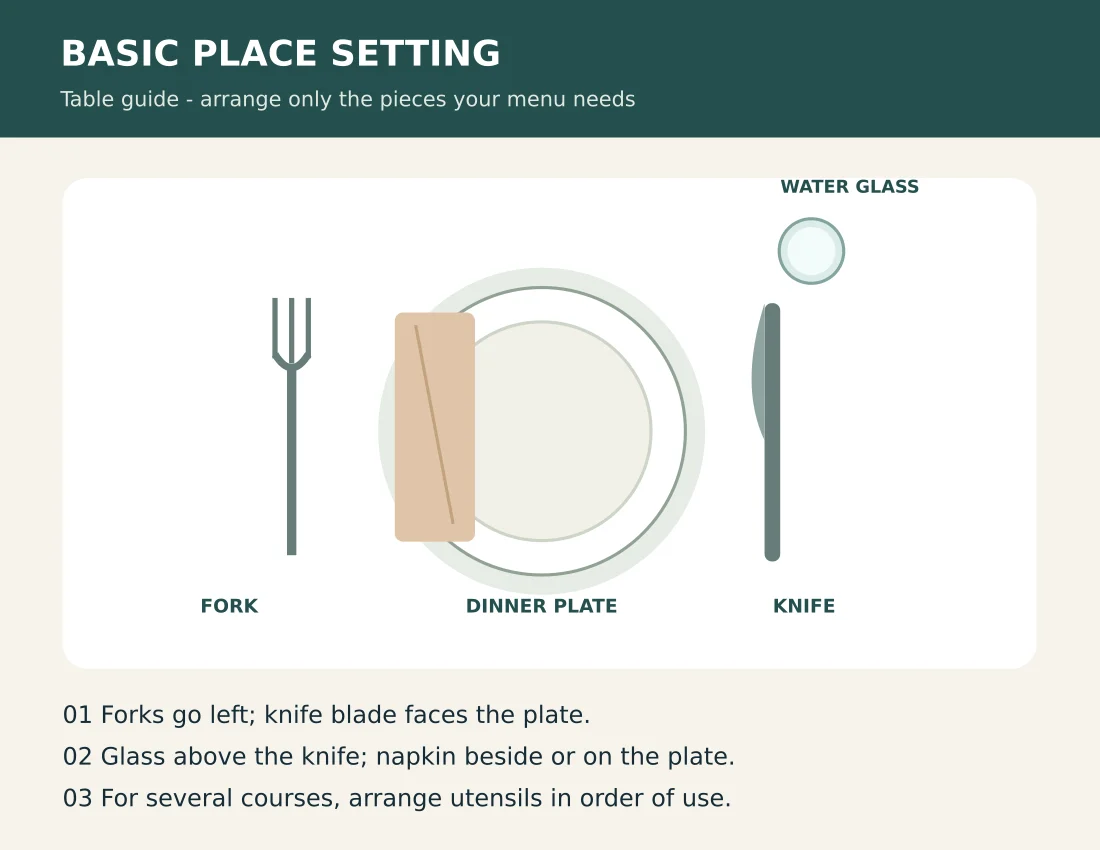
Basic Dinner Place Setting Guide
Editable illustrated table guide; the three-course version includes an extra fork, spoon and dessert spoon.
Package contents: one SVG master, one PNG image and one PDF reference, plus instructions. All placeholder wording must be replaced before use.
Download Basic Dinner Place Setting Guide (ZIP)
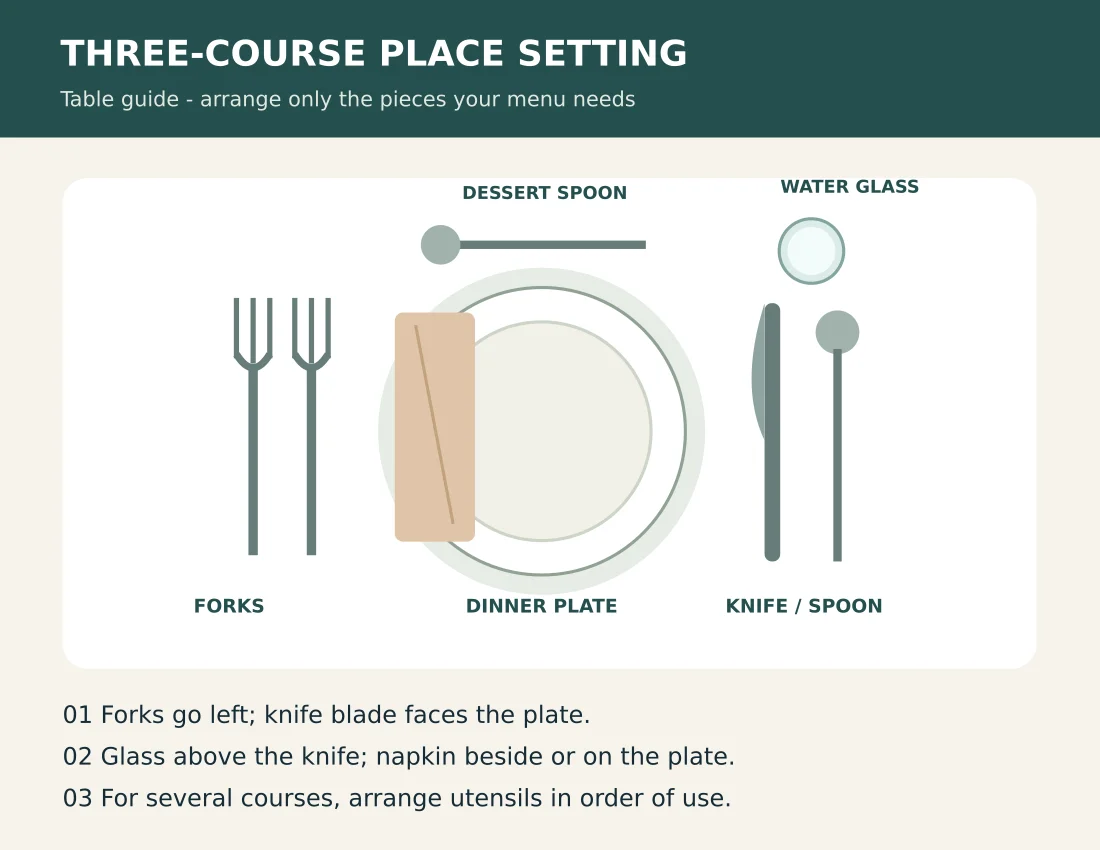
Three-Course Dinner Place Setting Guide
Editable illustrated table guide; the three-course version includes an extra fork, spoon and dessert spoon.
Package contents: one SVG master, one PNG image and one PDF reference, plus instructions. All placeholder wording must be replaced before use.
Download Three-Course Dinner Place Setting Guide (ZIP)
Choose the basic or three-course setting
The Basic Dinner guide shows a dinner plate, one fork, a knife, a water glass and a napkin. It is a useful reference for a straightforward meal where additional cutlery is unnecessary. The uncluttered arrangement also suits a practice session before setting a larger table.
The Three-Course Dinner guide adds an extra fork, a spoon and a dessert spoon above the plate. Use the illustration as an example of an expanded setting rather than a rule that every three-course meal needs exactly those pieces. The utensils should match the actual dishes and the service arrangement.
Both downloads use a landscape page with clear labels and short instructions. You can print a reference copy for the person setting the table or edit the SVG to remove pieces that are not required. The PNG and PDF files are static versions of the supplied diagram; they do not update when you edit the master.
Understand the main parts of a place setting
The plate anchors the arrangement. Leave enough room around it for the diner to use the utensils comfortably. A decorative charger is optional and is not necessary in the supplied basic diagram. If you use one, coordinate its size with the plate and the available table space rather than letting it crowd adjacent guests.
In the convention illustrated here, forks sit to the left and the knife sits to the right with its blade facing the plate. A spoon, when needed, is placed to the right of the knife. For a meal with several utensils, organize them according to the order of use and the menu.
The water glass sits above the knife area. Additional glasses should be included only when relevant to the beverages being served. Keep them accessible and stable. A crowded collection of glasses can make a small table harder to use, especially when serving dishes must also fit.
The napkin can sit beside the plate or on it depending on the presentation and service. The basic illustration shows a napkin near the plate. Choose an arrangement that is easy for the guest to identify and use. A complicated fold should not interfere with the practical layout.
These guides illustrate one common arrangement, not every cultural or service convention. Adapt the table for the household, venue and guests using it. Comfort, clear access and the right utensils matter more than reproducing a diagram that does not suit the meal.
Organize event preparation with daily planner templates.
How to use the printable table-setting guide
First, write down the dishes and beverages being served. Decide which utensils are required for each course and whether they will be placed before guests arrive or brought out with the dish. This simple menu check prevents unnecessary pieces from appearing on the table.
Next, lay out one sample setting using the actual plates and utensils. Compare it with the chosen diagram, check the space between neighboring places and make sure the glass is easy to reach. Adjust the arrangement before repeating it across the rest of the table.
Print the PDF at a readable size for reference. It is not intended to be used as a full-size placemat outline for tracing the exact locations of utensils. The proportions in the diagram help explain the relationship between pieces; the actual sizes of your dinnerware may be different.
If you edit the SVG, change the title and labels to match the pieces retained. Removing a spoon while leaving its label creates a confusing guide. Export a new PNG or PDF after editing and inspect the result. Keep the original package separate so you can return to the starting layout later.
Adapt the setting for everyday meals and events
For an everyday dinner, the basic arrangement may be sufficient. If the meal does not need a knife, omit it rather than setting one without a purpose. If a soup course is served, add the appropriate spoon. The menu provides a more reliable starting point than a generic level of formality.
For a catered event, coordinate with the service team. They may plan to bring certain utensils with each course or replace pieces after use. Set the table according to that agreed process so the guests do not receive duplicate cutlery. The diagram supports preparation but does not replace communication with the venue.
For a buffet, guests may collect utensils at the service area or find them wrapped at each place. A complete multi-course setting may be unnecessary. Keep the table clear enough for plates to be placed safely when guests return from the buffet, and decide how used items will be cleared.
For children or guests who need a different arrangement, prioritize comfort and accessibility. The space needed to reach a glass or use an adapted utensil can differ from a standard illustration. Ask what is helpful where appropriate, and avoid treating a decorative table plan as more important than the diner’s practical needs.
Coordinate helpers and vendors using contact list templates.
Example: setting a small three-course dinner
Imagine a dinner with a salad, a main course and a spoon-served dessert. You might prepare a salad fork and dinner fork on the left, a knife on the right, a water glass above the knife and a dessert spoon above the plate. Remove the extra spoon shown to the right if the menu does not need it.
Place the first-course fork farther from the plate and the later-course fork nearer it under the convention used by the guide. The important point is to make the intended sequence clear. If the service team will bring dessert utensils with dessert, the spoon above the plate may also be unnecessary.
Test the sample setting with the serving pieces you expect to use. A table may look spacious before a salad bowl, bread basket or shared dish arrives. Check where those items will go so the final arrangement remains functional. Move decorations if they obstruct the space needed for serving.
Avoid confusion with place cards and seating plans
A place card identifies a guest’s assigned position, while a seating chart directs guests to their table. Neither document specifies how a fork or glass should be arranged. Keep these decisions separate when planning an event so a clearly labeled guest seat does not distract from an incomplete or impractical setting.
If you add a place card, position it where it can be read without blocking the plate or glass. Check that the wording matches the guest list and that any separate meal-selection information is handled according to the event’s process. The supplied diagrams do not contain names or guest assignments.
Before guests arrive, walk around the table and check for missing pieces, inconsistent glass placement and crowded edges. Use the same sample setting for consistency, then make deliberate adjustments for the menu or individual needs. A simple usable arrangement is preferable to an elaborate display that is difficult to dine at.
For venue preparation, compare our restaurant checklist templates.
Existing previews and original source references
The existing images below are retained as reference previews. Working source links open external pages with their own formats, prices or access conditions; they are not the two original download packages above. Unavailable source buttons have been removed so a preview is not mistaken for an accessible file.
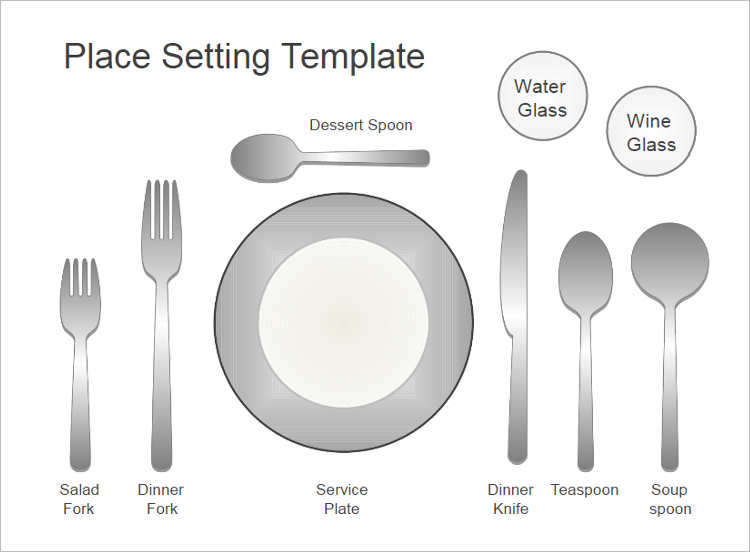
This original preview did not have a working download link attached. Use the original editable packages above for a direct file download.
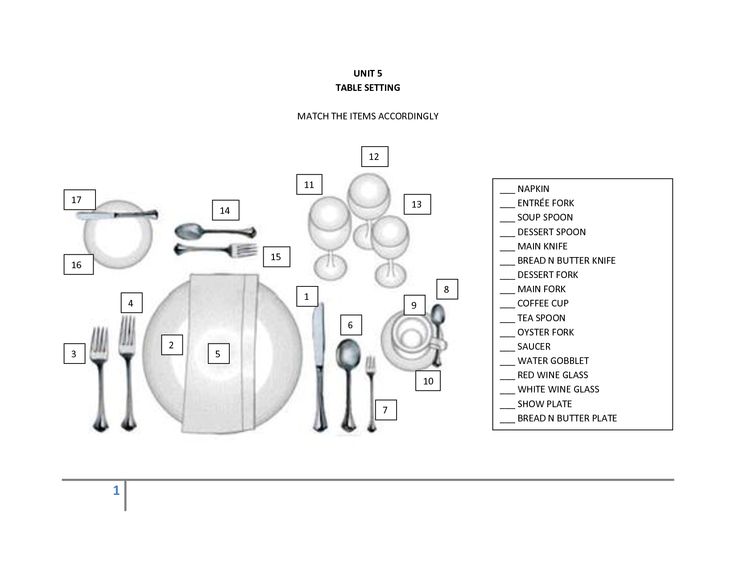
This original preview did not have a working download link attached. Use the original editable packages above for a direct file download.
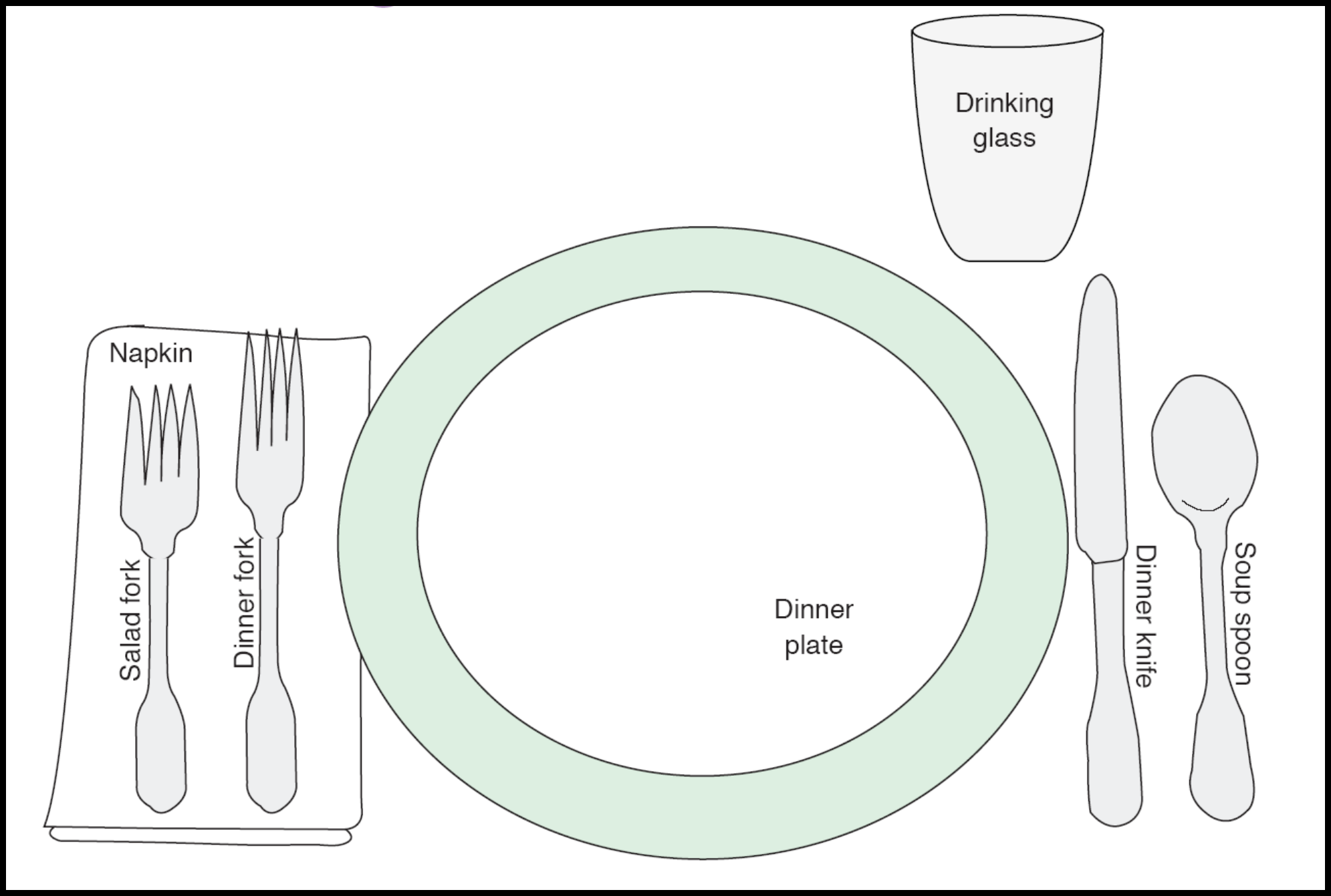
This original preview did not have a working download link attached. Use the original editable packages above for a direct file download.
This preview’s original source could not be verified during the link check. The original editable packages above provide direct downloads.
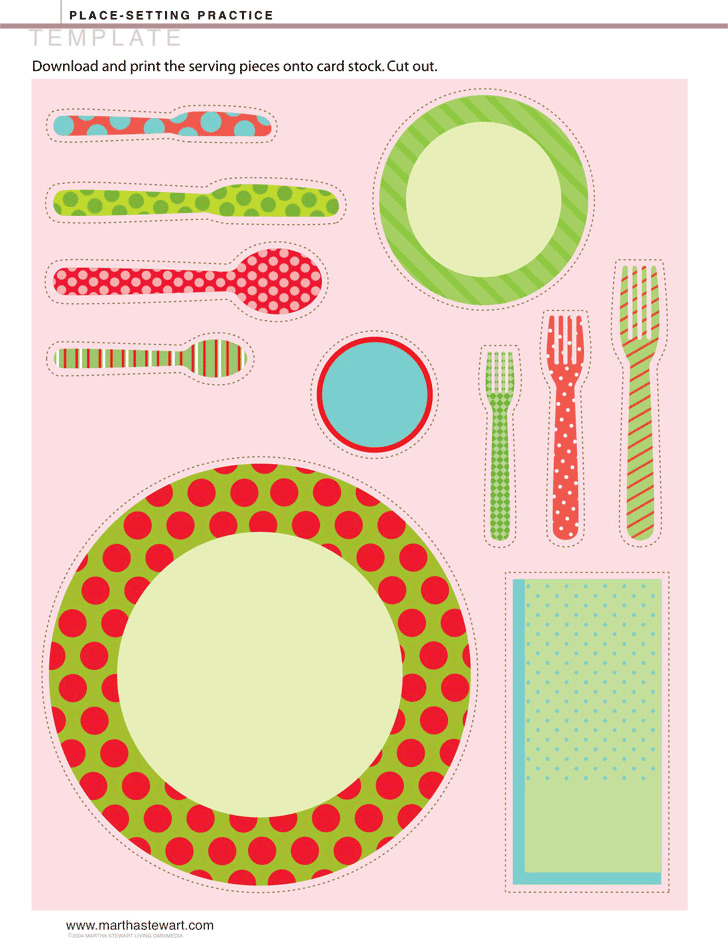
This preview’s original source could not be verified during the link check. The original editable packages above provide direct downloads.
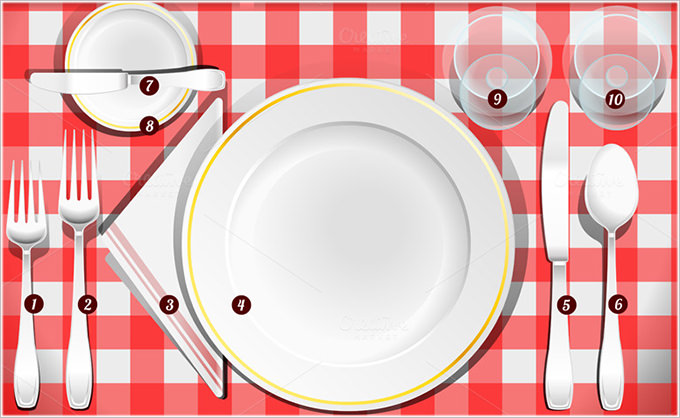
This original preview did not have a working download link attached. Use the original editable packages above for a direct file download.
Frequently asked questions
Are these place setting templates seating charts?
No. They show the arrangement of a plate, utensils, glass and napkin for one diner. Guest-to-table assignments need a separate seating plan.
What file formats are included?
Each ZIP contains an editable SVG, a PNG and a static printable PDF, plus instructions. The page layout is landscape Letter size.
Must I use every utensil in the three-course diagram?
No. Include only the pieces required by your menu and service plan. Remove unused utensils and update the labels if you edit the guide.
Can I print it as a full-size stencil?
The files are explanatory diagrams, not a true-scale placemat or cutting pattern. Use the actual dinnerware when checking spacing.
Can I change the colors and labels?
Yes, in compatible vector software. Export a new PNG or PDF after modifying the SVG master.
You must be logged in to post a comment.